In just a few hours I will be leaving St. Vincent. When I say to people here that I am leaving, I sometimes get the question: "Are you happy?" I am taken a bit off guard by this question. What does that really mean?
Am I happy to be leaving this wonderful place with all its abundant nature? Am I happy to leave the people here, that I have gotten to know quite well over the past three months? Am I happy to leave the horses, who have been some of my best friends here? No, no, and no. Of course not.
But then: Am I happy to be going back to a place where I understand what most people say? Am I happy to be going back home? Am I happy that I will meet my friends and family soon? Yes, of course.
I think what the question really asks is whether I am content with leaving at this time. And after having thought a bit about it, I think I can quite firmly answer yes. This has been a wonderful experience, but now I have had my fill. I miss home, a culture that I know, a language that I understand, my family, and my close friends. Of course I will miss this place, but in my heart there is a feeling of 'rightness' about going home now. The place here, the horses, the nature, and the people I have met here will always have a special place in my heart. I will treasure the memories and return to the blogposts I have written about this adventure often (especially during winter, when the days are short and cold).
But my adventures aren't over. Life is in itself an adventure, and next in my life comes a three week stay in England. I also have some things to write about that I have experienced during the last couple of weeks here, so look forward to some more pictures and magical moments. For now, enjoy this film about my everyday life here (I do the voiceover, hope you like it).
Books read: 27
Showing posts with label Horses. Show all posts
Showing posts with label Horses. Show all posts
Tuesday, 28 June 2011


Saturday, 25 June 2011
A wanna ride a harse
Before I came here, I found out via wikipedia that the language spoken in St. Vincent was English. Then I came here, and I realised that I couldn't understand anything. Here at Richmond Vale Academy, most people speak Spanish. I don't speak Spanish, so I was lost at mealtimes, and any time I was with Spanish-speaking people (all the time, in other words). And the locals here speak what is called 'Broken English'.
We had some groups of local schoolchildren visiting a while back. We were showing them around and teaching them about the animals and the gardens. When they came running towards the horses, they would often shout: "A wanna ride a harse!" We thought that was a bit funny. The way they talk here is really difficult to understand. They speak fast, and slur the words together. There are certain sounds they just don't pronounce, like 'th'. 'The' becomes 'da', and 'birthday' becomes something along the lines of 'bird day'. The slogan for one of the political parties in St. Vincent the previous election was: 'We naah tun back'. This was printed on T-shirts (with this spelling), and I didn't understand what it meant before I said it under my breath to myself. It is really strange (and a bit funny) to read these obvious spelling mistakes, since I notice them easily and get irritated if I am at home or on the internet. Here, though, it is mostly just funny. It is really difficult to learn the local language, so the only thing I can actually say (and understand) is 'me na no' (I don't know).
 Now, on to something else. These flies have been flying around and landing random places. They are connected in pairs by their bodies, so I have been calling them double flies. It is like I am almost constantly seeing flies having sex, and also having sex on me (in my hair, on my skirt, etc.). Frankly, it's a bit irritating. But it's also fascinating. Especially how they can survive and navigate (if they do so at all), being connected like that. And also what the point of this connecting thing is (how it works). I guess biology is the right field for me, since I'm asking these questions all the time. I love being curious about nature!
Books read: 26
Pages read: 7213
Tuesday, 21 June 2011
Leadership
Now that my stay here is nearing its end, I have realised that I have learned a lot about what constitutes good leadership.
In the herd here, there is one mare, Darling, who is the lead mare. In a way, I see her role in the herd as a 'queen'. She is a fair and just leader who leads by example. She is acutely aware of her surroundings at all times and is always the first to investigate something new or scary. She will almost always be the first to notice an open gate, and to notice when my focus is lacking when I'm working with her. She is not dominant, and the others freely choose to follow her. To be elected a leader like that, a horse has to follow the rules of the herd and apply them correctly to increase their rank. In this way, the horse earns respect from the other horses in the herd, and the herd has a say in the forming of the lead horse. Through good leadership and effective pecking order, every horse knows its place in the herd. This creates harmony, security for the individual, and a unified group, working together in the best way according to each horse's ability and personality.
Pecking order is a kind of chain of command, supporting and educating all individuals, from the strongest to the weakest. It is the framework of the herd, and comes from the fact that horses are social animals, and also prey animals. Because of this they need someone to follow when danger is at hand, so that the whole herd can work together and stay safe. One of the rules in the horses' code (like 'the code' at sea) is that if a horse cannot find a leader to follow, it is its job to lead. (see Naked Liberty by Carolyn Resnick, p.171) A horse feels more secure and safe when it is following a leader, and the best partnerships humans have with horses come from the human proving itself as a good leader to the horse, and the horse deciding to follow and trust the human.
Dictatorship is definitely not good leadership. Dictatorship in a herd would not work at all, and that style of leadership (the dominant style) would always be questioned. The only male in the herd here, Jack, is a dominant horse. He is not as respected as Darling, and is actually number three or four in the pecking order. His leadership is often challenged by the younger horses, and he can get a bit violent with them.
Sadly, though, this is the kind of leadership we often find in leading positions in corporations today. Selfish leadership where rules sometimes are made up along the way, and very few of the workers would choose to follow the boss if given the choice. Leadership is not earned, it is acquired through pushing oneself on and up, often at the expense of others. Good leadership makes people want to follow and please the leader, while dictatorship pushes people away.
I have also realised that the kind of leadership found in lead horses such as Darling, is the kind of leadership you have between dance partners. The man leads, but the intention and goal is that the man and the woman move as one, in harmony. They are partners, but it is clear who is making the decisions. When I dance, I love to really let go and be led. It is such a wonderful feeling. This kind of dancing partnership is therefore possible between humans and horses, and it is really a magical thing.
I am very thankful that I have witnessed such a great example of good leadership here. I will carry this experience with me, and in the process of becoming a better leader myself, I will be on the lookout for good leaders to follow, because in that position I feel more secure and I have the freedom to become creative.
Books read: 26
Pages read: 6963
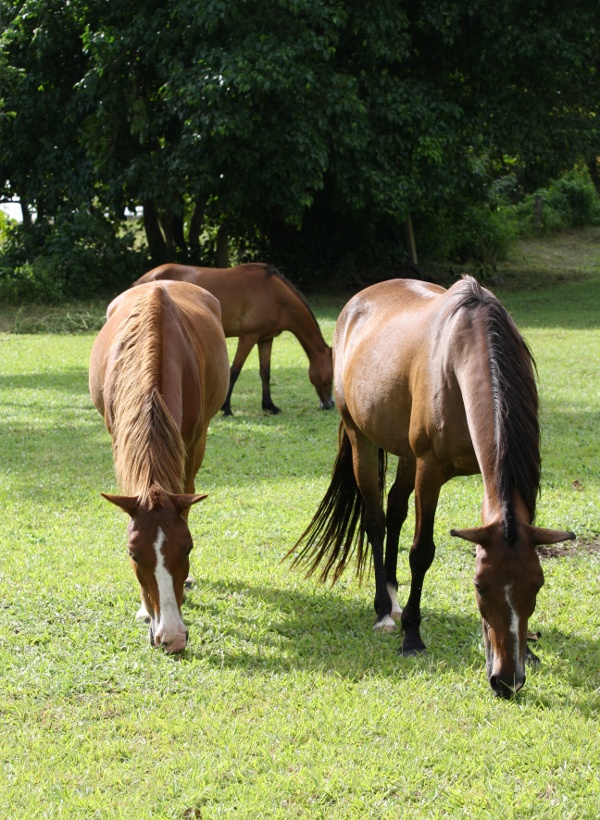 |
| Jack (on the left) and Darling grazing together |
Pecking order is a kind of chain of command, supporting and educating all individuals, from the strongest to the weakest. It is the framework of the herd, and comes from the fact that horses are social animals, and also prey animals. Because of this they need someone to follow when danger is at hand, so that the whole herd can work together and stay safe. One of the rules in the horses' code (like 'the code' at sea) is that if a horse cannot find a leader to follow, it is its job to lead. (see Naked Liberty by Carolyn Resnick, p.171) A horse feels more secure and safe when it is following a leader, and the best partnerships humans have with horses come from the human proving itself as a good leader to the horse, and the horse deciding to follow and trust the human.
Dictatorship is definitely not good leadership. Dictatorship in a herd would not work at all, and that style of leadership (the dominant style) would always be questioned. The only male in the herd here, Jack, is a dominant horse. He is not as respected as Darling, and is actually number three or four in the pecking order. His leadership is often challenged by the younger horses, and he can get a bit violent with them.
Sadly, though, this is the kind of leadership we often find in leading positions in corporations today. Selfish leadership where rules sometimes are made up along the way, and very few of the workers would choose to follow the boss if given the choice. Leadership is not earned, it is acquired through pushing oneself on and up, often at the expense of others. Good leadership makes people want to follow and please the leader, while dictatorship pushes people away.
I have also realised that the kind of leadership found in lead horses such as Darling, is the kind of leadership you have between dance partners. The man leads, but the intention and goal is that the man and the woman move as one, in harmony. They are partners, but it is clear who is making the decisions. When I dance, I love to really let go and be led. It is such a wonderful feeling. This kind of dancing partnership is therefore possible between humans and horses, and it is really a magical thing.
I am very thankful that I have witnessed such a great example of good leadership here. I will carry this experience with me, and in the process of becoming a better leader myself, I will be on the lookout for good leaders to follow, because in that position I feel more secure and I have the freedom to become creative.
Books read: 26
Pages read: 6963
Tuesday, 14 June 2011
A normal day
 |
| Morning action: Cleaning the bathroom and corridor |
 |
| Shovelling manure into the wheelbarrow... |
 |
| ...and out, onto the compost heap. |
 |
| Taking Gaia out to eat. |
 |
| Mmmm....grass... |
 |
| The donkeys are also taken out to eat on a rope |
 |
| Time for a snack! This is Dragon fruit, or Pitaya, the fruit from the Moonflower. |
 |
| Clearing up in the pasture, these dead palm branches fall down regularly |
 |
| Checking the fence and cutting bushes to keep them from taking over. |
 |
| This is fun! Cutting down banana trees with a huge knife (machete/cutlass) |
 |
| Giving the horses water (in the green bucket), making sure that I don't destroy the recently planted corn. |
 |
| Sharing territory with horses while relaxing in the shade with a good book. Perfect end of the working day. |
Books read: 25
Pages read: 6747
Monday, 23 May 2011
Spirit
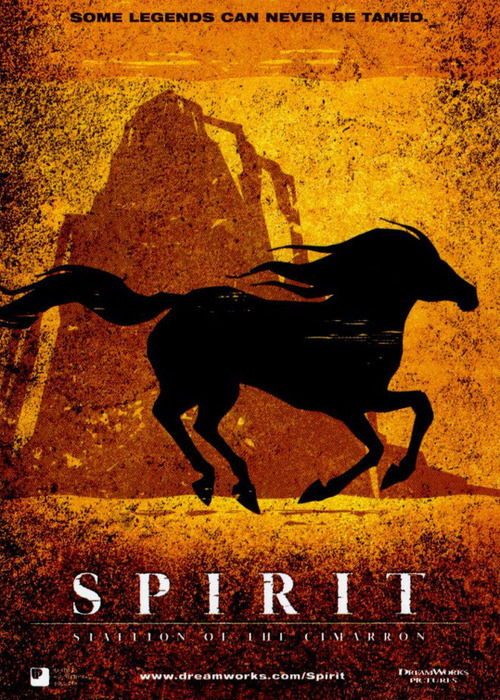 While I've been here, I've been trying to understand what sparked my interest in horses. I actually don't know the point it began, but I can name a few influences. I grew up in a town, and had little interaction with horses, but when I was around thirteen years old my family got a computer. On this computer was a film called "Spirit: Stallion of the Cimarron". This was one of the few films we had at home, so consequently I watched it a lot. I loved the film, and at one point I knew almost all the spoken words. It is a film about a wild mustang stallion who is captured by different humans (the cavalry and a Native American), and his struggle to be free. He is named 'Spirit Who Could Not Be Broken' by the Native American.
Around that same time I read Black Beauty by Anna Sewell. Thus the first few influential experiences with horses, even though they were fictional, were from the horse's point of view, and treated the horse as a thinking and valuable being. The combination of a free spirit and being bound in a herd is what has fascinated me when it comes to the horse. Also, I have always thought horses are beautiful animals, and as I enjoy art, I have seen them a lot in paintings. They are majestic animals, and there is power in a horse that attracts people.
From those early fictional experiences with horses, slowly my interest in horses grew. I sought out books and comics about horses (which were readily available and targeted at my age group and younger). I found books about horses in their wild state and became interested in natural horsemanship as introduced by Monty Roberts and Pat Parelli. I read books about this and became really interested in trying some of these methods out on a horse, but I didn't have access to a horse.
When I was 19, I decided to go to what in Norwegian is called folkehøgskole to learn natural horsemanship. This is a type of gap year school where you can go to learn something or spend time doing something you like. You could do anything from drama to skiing, natural horsemanship or gardening. I was lucky and found a school with a very good horse programme with few people and many horses. I learnt a lot about horses, and I was introduced to Stina and the Carolyn Resnick method by one of my fellow students.
That has led me to where I am today. Here, in this herd, there is a mare called Spirit. She is very sensitive and afraid of humans, and while I am here, she is one of my 'project' horses. That means I am spending time with her and getting lessons from Stina with her. I love it, but it is also a challenge for me, because when I am around horses that are afraid of me, I easily get afraid too. But she is a really sweet horse, and it is good to see that she functions very well in the herd. She is second in command, and is well respected by the younger mares. Jack, the only male in the herd, and Spirit have a close relationship. Whenever Darling, the leader, is not around, I often see Jack and Spirit hanging out together.
It is so nice to be able to see some of the friendly gestures of the horses, not only notice the bigger pecking order squabbles. I feel like I understand much more of how the herd functions and the language of the horses, just since I came here. This has come from a lot of observation when spending time with the horses in the first Waterhole Ritual, sharing territory. The horses give me more than I had ever expected. I understand the concept of real leadership - a leader who leads by example that you want to follow - much better now. The concept of teamwork has also become clearer to me, and I am constantly learning. I am very thankful for the journey I have had since those early introductions to horses. To think that a book and a film can have that big an impact on the direction my life has taken!
Books read: 20
Pages read: 5513
Tuesday, 17 May 2011
Pruning the fence posts
A while back, the banana field next to the horses' pasture was fenced in so that the horses could eat in there. We were told that as a part of our daily tasks, we were to check the fence every day to make sure that nothing grew on it or was otherwise hindering the electricity flow. So we started doing that. After a couple of days, we saw that the fence posts had started sprouting little green leaves. The logical thing to us was to remove them.
But apparently that wasn't the right thing to do. Stina explained that we had to leave at least some of the leaves to grow, or else the post would die. And then it would rot and fall down. It was also very important that the posts were put in the ground the right way up, or else they would not sprout. As I have said before: everything grows here. You can cut down a tree, cut it into 20 pieces, and lay the pieces on the ground, and after a week or two they would start sprouting, and you would have the beginnings of 20 clones of the chopped-down tree.
 I have actually seen this happen (although not of that magnitude). The other day I passed the chunks still left from cutting up a big tree in front of the academy, and a couple of them were sprouting new tiny leaves. Big chunks of tree-trunk, sprouting just because they could! Wow. I love how the plant life here is always multiplying and so very alive. At home, in Norway, if a tree was cut down and left lying on the ground, I would be pretty surprised if it started sprouting leaves and making new roots for itself.
So instead of cutting off all the green sprouts on the fence posts, we now just prune them so that they don't interfere with the fence wire. So now, the fence posts look like small trees. Eventually, they might end up like the huge trees I saw once when I went to New Zealand. Really tall (and thick) poplar trees that are over 100 year old, which grew from fence posts in the Buried Village in the Rotorua area. Let's hope they don't, at least not in the foreseeable future. The more likely thing to happen, though, is that the fence posts will grow and bring the fence higher up. Then there would be a constant need to adjust the height of the fence.
I am once again in awe of nature. How marvellous! It's almost like magic: just break a part of the plant off and stick it in the ground the right way up, and you have a new plant! Just like that! If only it was that simple in every climate. But then, fast-growing things make for more things to keep cutting back from taking over. Good things never come without at least one disadvantage. But even so, nature is amazing and really awesome!
Books read: 19
Pages read: 5339
Sunday, 17 April 2011
16. Horses in the moonlight
Yesterday, I stayed up far too late (reasons: distractions and reading), and just as I was going to bed, I decided I wanted to look at the moon. So I put my toothbrush in my pocket and went outside to gaze at the moon. It was hanging yellow and large almost directly overhead. As my eyes adjusted to the dark, I saw that the trees had really clear moon shadows. It was like it was really midday, but someone had turned down the intensity of the sun. I looked towards the horses, and I could see some movement there, so I decided to go to them.
They were standing there peacefully, watching me approach. Horses have great night vision (at least better than humans), and I was also making quite a racket, snapping lots of twigs and stepping on other noisy things as I approached, so the horses were well warned of me coming. When I reached them, my eyes were totally adapted to the amount light the moon gave. I could pick out the different horses and see quite well what they were doing, but I couldn't see their faces very well, and therefore decided to stay cautious.
I ducked under the fence (a single wire electric fence), and stayed well outside the horses' space, except when some of them offered to say hello to me. Most of them were standing resting and snoozing, as they would normally do during the day, and really, nothing had changed in their behaviour as a result of nightfall. This is completely normal for horses, in case some of you thought that they lie down and sleep for eight hours straight like we humans do.
I just stayed there with them and experienced nature in the moonlight. I saw the moonlight highlight the white socks on some of the horses, I studied the bushes, and realised I could see every single leaf. Everything looked different, but also just the same, bathed in moonlight. I saw the horses relax, and relaxed and breathed with them. I felt the magic of the night all around me, in the fireflies that would light up occasionally over a bush, in the song of the crickets, and in the horses standing there so quietly in the moonlight. I let the small amount of stress that was still in me trickle out and disappear into the night.
I left the horses with a clear and relaxed body and mind. I had spent my first midnight with the herd, and it was beautiful.
Books read: 17
Pages read: 4726
PS: Total side note: Today's biggest laugh (for me at least), was this video. As a bonus, it is also informative.
Saturday, 16 April 2011
15. Car bugs and the wonders of nature
Yesterday evening, I came back to my room, and in the darkness of the corridor outside my door, I saw two tiny green lights. It looked very much like a miniature car with green headlights, but I realised the light must come from some sort of bug, and I wanted to see what it looked like, curious as I am. So I opened the door to my room and turned on the light inside. I could see the faint outline of an approximately two centimetres (close to one inch) long bug. But when the light hit it, the green lights faded. I shut the door again to see the green lights, and they brightened up again, right before the bug flew off through the window. It flew off smooth and steady, and it reminded me very much of the flying Ford Anglia in Harry Potter and the Chamber of Secrets, only in miniature version. It made my evening a bit brighter (in more than one sense), and put a smile of wonder and enjoyment on my face.
I love how everything is alive here, everywhere you look. The other day, I was lying in the hammock, and what the locals call a maniku (I think that is how it is spelled) came out beside me, in the grass, and started searching for food (bugs, I presume). It looks like a weasel or a Norwegian 'mår' (according to google translate, this is a 'marten' in English). It is quite small, and very cute and furry, with a bushy tail. I watched it foraging for food for a while, taking care to stay quiet, and then it disappeared into the bushes.
I am very fascinated by nature. Its complexity, harmony, balance, and diversity are just a few things which draw me to it. I am also naturally curious, and I love asking questions about the world surrounding me. I am always wondering what different animals eat, how they live, and how they survive predators (if there are any). It is also very fascinating to see how different living organisms face and create solutions to the problems they might have in surviving and thriving in any given environment. Examples include camouflage, lights, poison, and lots of other things that animals and plants use to stay alive.
Also, everything in nature has its reason and consequence. The flies and mosquitoes that bite humans (like me) and make them itch (a lot), are doing it to feed their young or to survive. These bugs are then prey to birds or bats or lizards, who again are prey to eagles and other predators. And when they die, it all comes full circle, and small bugs and flies eat the carcass. It's the circle of life, as they would say in The Lion King. And really understanding that you are a part of that circle, gives a feeling of peace and certainty that is very deep and good to rest in.
This evening, I watched the horses in the moonlight, and saw the stars twinkling above. The fireflies were lighting up, and the crickets were singing. How lucky I am to be here now, I thought. How lucky I am to live on this green and blue planet, so full of life!
Books read: 17
Pages read: 4726
Friday, 15 April 2011
14. Scratch me!
Today, we took the two lead horses, Jack and Darling, to the fruit garden. It's guava season now, so there were plenty of ripe guavas lying on the ground. The horses are crazy about fruit. We let them eat quite a lot of guavas, and then we took them to a bunch of yellow bananas we had discovered earlier. All the yellow ones were gone, sadly, but the horses also love the green ones. They eat the whole banana, including the peel. And they love it. Many horse people (like some of the people in the clinic) think this is quite strange, since horses normally don't like bananas, and definitely not the peel (according to others...I have no idea...I have never tried feeding a horse a banana before). But Darling couldn't get enough of those bananas. She was ten metres away from them on a short rope, but still she would turn and head for the bananas. It was very nice giving the horses such a treat, especially since they enjoy it so much.
After having been back for a while, I got out of the hammock I had been resting in to see where Kristina (which is the name of my fellow working student, and also my friend from Norway) was. When I came around the corner, she was scratching Moonlight, the youngest and most trusting horse in the herd. Before this, we had hardly touched the horses at all. Then Gaia, another trusting horse, came up to me. I guessed she wanted to be scratched as well, so after saying hello, I tried to scratch her on the part of her body closest to me. She liked it very much (and showed it by scrunching up her nose in pleasure), so now the game was started.
She would show me where to scratch her, and I would scratch her. When I stopped, she would signal for me to continue by turning her head towards me, as if she was saying: "More, please. Right there." When I decided I had had enough, Moonlight claimed my attention, and the game was on again. Moonlight wanted to be scratched on her tail and the inside of her hind thigh, and I thought these were risky areas (in case of kicks), but I tried. It went very well, and I could thoroughly understand why she wanted to be scratched. She had lots and lots of insect bites, and I can definitely relate to how that feels, as my legs are polka dotted with them as well.
It was a really nice bonding experience with the horses, and it is so nice to see and be able to interpret their telling me where to be scratched. It is a kind of grooming, which is what horse friends do to each other, and it is a kind of friendship ritual. It is very nice to feel that the horses feel they can trust me enough to let me scratch relatively intimate areas. This scratching episode just made my day.
Books read: 17
Pages read: 4694
Tuesday, 12 April 2011
11. Walking poop
Today, as I was shovelling manure from the wheelbarrow onto the pile of compost, I discovered something that was so funny I laughed out loud (even though I was alone). One of the pieces of poop was slowly but surely moving towards my shovel! It was as if it wanted to be thrown into the compost pile as quickly as possible! It looked very strange, but I soon realised what it really was. When I pick the manure up from the ground, I often see these small holes in the soil underneath. I have realised that these were from small black beetles who lived in the manure. So underneath the moving poop there were one or two of these beetles. All the same, the sight of this piece moving towards my shovel made my day. I still smile when I think of it.
When we (me and my friend who is also a working student here) were done with shovelling the manure, we decided to take a walk with the two lead horses, Darling and Jack, because they had been out eating on the lawn all day and needed variety (and we had been told to do it). As we were loosening their ropes and had got their attention, they both stopped and stared really hard inland. That was when we saw it. Two solid sheets of rain coming towards us. It was as if the horses were saying: "Do you really want to take us for a walk in that?"
We decided we wanted to, and agreed that rain was really quite refreshing here (as it is almost never cold), and it doesn't hurt getting wet. So we headed out. After about two minutes, the rain started pouring. It doesn't rain as heavily here as it does on pacific islands or in the rainforest, where the sun makes the water evaporate and then it rains down heavily later. Here, the weather comes in from the Atlantic Ocean, crosses the mountains and falls down on us, on the leeward side of the island. So it rains like it does in Norway, nice and easy, not raining cats and dogs so that you can't keep your eyes open. But even so, the rain was quite heavy on our walk. I got lots of water in my eyes, and it was dripping from my nose. After a short while, my T-shirt was soaked through and had started dripping too. The water flowed down my legs into my sandals, which were still wet from Saturday's hike. So I squelched on, blinking furiously, trying to get the fresh water out of my eyes so that my contact lenses would be all right.
It rained on and off our whole walk, and when we finally made it back, I was soaked to the skin (at least in the front). It had also stopped raining. When we had tied the horses again, suddenly my friend cried out: "Rainbow!" There it was: a beautiful and clear rainbow behind the house. We could make out an extra colour below purple, and it was yellowish. It was also double (but not all the way, for those of you who appreciate the reference). The rainbow was a wonderful ending to our not too pleasant walk, and it brightened my mood considerably.
Books read: 17
Pages read: 4649
Friday, 8 April 2011
7. Drums!
Before dinner today, there was a drumming lesson for everyone at the clinic, and I was allowed to participate. There were three teachers, or rather two teachers and one other man beating the bass drum to keep us all in time. We carried chairs and drums into the horses' pasture, and sat down in half a circle. Then we learnt the basics of the African drum, like where to drum to get the different sounds: bass (flat hand in the middle), tone (midway to the edge), and tips (tips of the fingers on the edge of the drum).
We then started learning different patterns and rhythms, while watching the setting sun. While we learnt how to drum and our teachers led us in singing different songs, Stina and Farah were dancing with the horses behind us. It was magical, with the rhythm, the sunset, and the horses running. But the magic was just beginning. As we progressed to harder combinations and faster rhythms, the sun sank into the ocean, and the dusk started gathering.
We sang, drummed and watched the view and nature around us, and after a while, Stina and Farah started dancing by us. The horses had apparently had enough, so the horse dancers and movers started dancing around the perimeter of our drumming circle, and invited those of us who wanted to join. They danced around till they couldn't any more, and we continued drumming, the beat taking us and guiding us through the dusk and into the dark of the night.
Then, just as the stars were twinkling to life, I started noticing other stars joining them. The fireflies had awakened with the stars. So now they took over the dancing, and they danced about in the air while we beat the rhythm to this great cosmic dance of the earth-stars. The drumming ended in a flourish, and then the dinner bell sounded. We were drawn back to reality from this magical land of rhythm and natural dance.
Books read: 17
Pages read: 4572
Thursday, 7 April 2011
6. Splash!
Today was the third day of the clinic. I had to get up really early again (before 6 o'clock...*yawn*) to help turn the horses into a completely new pasture (a banana field). Stina let all the horses go in at once, and they got very excited. One horse even jumped the fence, and the horses here don't often jump at all. The horse who jumped the fence also pulled it down (it's just a single electric wire), so we had to fix that. Then, after having sorted that out and eaten breakfast, we went on a trail walk with the horses.
We were all leading one horse each, and I was leading the last horse. In the beginning, she was really pushy, but after an eating break, she was moved to the second place in the line. After that, she relaxed a lot and the rest of the walk was really enjoyable and harmonious.
We took lots of eating breaks (for the horses, that is, not the humans). One of the breaks was a long one, and Farah, the guest teacher on the clinic, rode a little on one of the horses. The horses here have not been ridden much; most have never been ridden at all, and those who have been have not been ridden a lot. So Farah was just starting the horse (the lead mare, by the way) on riding with cues. It was very nice and harmonious to watch, no bucking or protesting at all.
After that break, we continued on our way down the trail to the beach. When we arrived at the beach, we were told to just let the horses choose what they wanted to do. The horse I was leading, decided it would be a good idea to splash a lot in the river. She would stand there, and then beat the water with her foot over and over again. Of course she splashed water all over me, but it was refreshing after the hot sun had been beating down on me the whole walk. But then she decided to wade through the river to get to the other side, so I waded in after her, and got my shorts and my sandals soaking wet. Then she decided to splash some more. It looked like she was having fun, though, and that made it worth it for me. When we finally headed home, I felt thoroughly splashed, and I was wet to the skin.
Overall, it was a very good trail walk. I liked being out with the whole herd, and I felt that I had a connection with 'my' horse, and that I could ask and demand reactions from her. This was the first time I have felt I could do that with the horses here. I am looking forward to expanding and growing when it comes to my connection and communication with the horses.
Books read: 17
Pages read: 4567
Tuesday, 5 April 2011
4. Rituals
Today was the first day of a clinic Stina is holding together with Farah DeJohnette. As a working student, I am an assistant at this clinic, so I get to participate in most of the programme (when I don't have to shovel poop or make tea). It is very interesting. Stina is a certified trainer of the Carolyn Resnick Method, which operates with something called the 'Waterhole Rituals'. This is essentiallly just a breaking down of how horses treat each other in a normal, wild herd.
Humans also have rituals. We have rituals for hygiene, for mornings, for evenings, for meals, and also for social life (in fact in most areas of life). For example we shake hands when we meet each other the first time, and we respect other people's personal space. Especially in cities, where lots of humans live very close to each other, we have lots of rituals (or norms) which we use and follow to feel safe. For example avoiding eye-contact with others while you're taking public transport, and staying at least one metre away from other people while shopping for groceries. Since humans naturally form and rely on habits, habits and rituals that are constant create a structured and reliable life and environment, and we feel safe when they are in place.
It is the same with horses. They are very social animals who live in herds, and have to function in a unit with others quite often. To make this work, there has to be a structure and a way of communicating that is universal for all horses (since horses change herds all the time in the wild). Carolyn Resnick studied wild horses and found the most important and covering rituals or set ways to interact that horses have and use actively.
The first two are quite intuitive: sharing territory and saying hello. I think I have mentioned this earlier, but these are very important basics when you deal with horses. Sharing territory is just being in the same space, and allowing the horse to come and go as it wants, while not paying much attention to the horse. Saying hello is analogous to the human ritual of shaking hands (except you do it quite often with the same horse). It involves holding your hand out to the horse (if the horse is close to you) with the back of your hand up. You then allow the horse to smell your hand or blow on it and then you go away. When two horses meet for the first time or are reunited, they blow in each other's noses, so this ritual is an imitation of that. You don't want to invade the horse's space for too long, therefore you move away afterwards.
I hope this wasn't too much horse talk for you, and if there is anything else (or more of the same) you would like to hear about, just leave a comment.
Books read: 17
Pages read: 4548
Saturday, 2 April 2011
2. Donkeys
I went on a walk with the donkeys today. I hope you can believe me when I say that donkeys aren't only stubborn, they're also really smart! With donkeys, you only have to convey the message (for example 'don't eat while walking') a few times, and then they get it. And they remember it the whole walk! With other animals, you have to constantly keep watch and remind them, but the donkeys just understood it really quickly. But then, since they are so smart, they also have a lot of opinions. That is why they are so stubborn, I think. Once they have decided something, they stand by it, and nothing you can do can change it (except use far too much force for it to be called humane or even normal).
Today I shovelled more poop. But that is what I will do every day, so there is no use repeating it. It's hard to clear the area we were working on today, because along the ground there are these long root-like things, and they make everything you try to put on your shovel fall off. We are currently clearing an out of use banana field, so there are also all the dead banana leaves on the ground. It makes a simple but disgusting job just that much more frustrating.
I realise I am complaining, and I shouldn't, because it is so wonderful here. I thought I would just give you some facts about the place I am living so that you can imagine it somehow. There are 7 horses here: one gelding and 6 mares. They have a relatively large pasture, which consists of two relatively flat parts with a hilly part between. On one of the flat parts is the shelter where you can find the hammock and the water for the horses. They also have 3 donkeys, 2 chickens, 1 rooster, 14 pigs (6 of them only days old...soooo cute!), some (I don't know how many...maybe 15 - 20) sheep. Five of the sheep are constantly breaking out of the enclosure, they just walk straight through the electric fence (at least that is what it is generally thought they do). There is also a vegetable/fruit garden, fields of banana trees, and also other fruit trees (like guava, which is soo good). The building complex is quite large, but we are only approximately 30 people living here at the moment.
That is all for now, in this abnormally long blog post (for it to be part of BEDA...now I probably won't have anything to write tomorrow) about (at least) three different themes.
Books read: 16
Pages read: 4504
1. Pictures and poop
 The beginning of BEDA! I really hope I will manage this. Today I feel that I am slowly but surely adapting to the climate and the tasks here. The day has consisted mainly of shovelling poop, pushing a wheelbarrow full of poop and shovelling more poop. Of course, the poop is really manure, but it's still a shitty job. When I wasn't shovelling poop, I was taking a break in the hammock and enjoying the view of the sea.
When we were finished for the day, I took some photographs. I captured the closing of the tiny green growths, and I hope to make a tiny video (a GIF) out of it soon. I also photographed my new blog backgound, and I met this guy.
 There are lots of these small lizards around, and I find them really cute, even though they are not geckos. This one sat very quietly. It's like it was born to be a model!
These pictures (and more) were just taken in the garden and the pastures of the horses. I strongly suspect that more will come your way.
Books read: 16
Pages read: 4494
Friday, 1 April 2011
Birthday and BEDA
Today is my birthday (yes, because of the time zone, it is still my birthday here), and at dinner tonight, one of my new friends here started a birthday song. That was really nice. Today I have been working on clearing and cleaning up in the horses' pasture. And also relaxing in the shade (and in my room because I was so tired) and reading my book. And also itching and scratching...my legs are super spotty... I also had a lesson with Stina (the horse trainer I am learning from). She showed us the difference between the horses she has and how they react to body language, and how one should adjust the training to the horse's personality and mood. It's really interesting to see how the horses have so different personalities and behaviour.
Tonight I took my computer out into the garden and played the song Fireflies by Owl City while watching the fireflies. It seemed fitting. They are really wonderful creatures, fireflies. They look like sparks from a dying camp fire, because they have a tendency to light up and then die out again really quickly. I love the nature here - there is something that is alive everywhere you look. In comparison to winter-dead Norway, where nothing stirs and all you see is snow and dead-looking trees. It is pretty amazing and wonderful to be in a place that is so very much alive.
I have decided to do what is known in some circles as BEDA - Blog Every Day in April. Kristina Horner is doing it, and I thought it sounded like a good idea for me too. That way I can document my first month here and share my experience with you. So you can expect daily blog posts, and I hope you enjoy it. Feel free to leave me feedback on what you want to hear more about or maybe what you want to see in pictures.
Books read: 16
Pages read: 4448
Tuesday, 29 March 2011
Touchdown!
I have arrived! Wow! It's so strange being here in the Caribbean. It's warm (28 degrees Celsius), humid (74%) and sunny. Almost completely different to Norway when I left it - chilly and dry. I left Norway on Sunday afternoon, stayed overnight in England, and journeyed on to Saint Vincent via Barbados yesterday. That was a very long flight, and I was very ready to leave the plane when we landed. At check-in in Barbados, I was wished a happy birthday! That just made my day. I travelled here with my friend who is here to do approximately the same thing as me, and we arrived yesterday evening local time (after a gruelling one and a half hour taxi ride), and tumbled into bed at 4 AM according to our body clocks. That was a very long day.
Today I have seen the place I am staying by daylight for the first time, and it's absolutely gorgeous. The view is fantastic, and everything is green. I have also met the horses, and they seem very nice. These first days I am going to spend time with them, but I am not to communicate with them more that just saying hello (which means offering them the back of my hand to sniff, and then moving away), and that suits me fine. That way I will get to know them and learn how to tell them apart. The people here are very nice and welcoming, and it is not very busy around here, which is nice. I will never tire of the view and nature here. It is so fantastic and rich! I even found a leafy growth on the ground that closes if you touch it, to protect itself.
I love it here, but it is still a bit unreal that this is going to be my home for the next three months. I suspect that will change soon, as I get into the routines and get used to the climate. Pictures will come soon.
Thursday, 10 March 2011
Exciting adventure beginning soon!
The days are slowly but surely (actually not that slowly) ticking away, and the date of my departure for the Caribbean island St Vincent is coming closer. I am both looking forward to and dreading that day, the 27th of March. Or rather, I have mixed feelings when it comes to the whole trip. I think this is partly due to my lack of knowledge about what I am going to be doing while I am there, and generally all the unknowns involved in this trip. I am quite a control freak, therefore having so many unknown factors involved in this big thing I am going to do is quite unnerving.
I don't think I have explained fully what I am going all the way to the Caribbean to do, and that is partly because I haven't known and partly because I didn't want to admit that it was so soon. Now that I have come more to terms with this, however, I feel the time is right for me to tell you what will be happening with me and consequently what will appear on this blog.
On the 27th of March I am headed off to the Caribbean, and I am staying on St Vincent for three months. I am going to be a working student, learning about a method of horse training called Liberty Training, which was developed by Carolyn Resnick. I am going to be learning this from a certified trainer in this method, Stina Herberg. I am also going to learn about horticulture, or rather how they grow their food (which is all organic), and help train and care for the other animals they have where I am going, like sheep, donkeys, and hens. I am staying at Richmond Vale Nature and Hiking Center. This is going to be something out of the ordinary, and I think it will be really interesting.
I am planning on blogging about the experience, so you will hear about what I learn, what I think about it, funny things I experience, and so on. I will still read books and keep you updated on that, of course, since I haven't finished my 30 books challenge. I hope you will enjoy following me on my big adventure, which I am looking forward to sharing with you.
Books read: 12
Pages read: 3549
Subscribe to:
Posts (Atom)